


UWCM student nominated for International Children’s Peace Prize
December 1, 2025
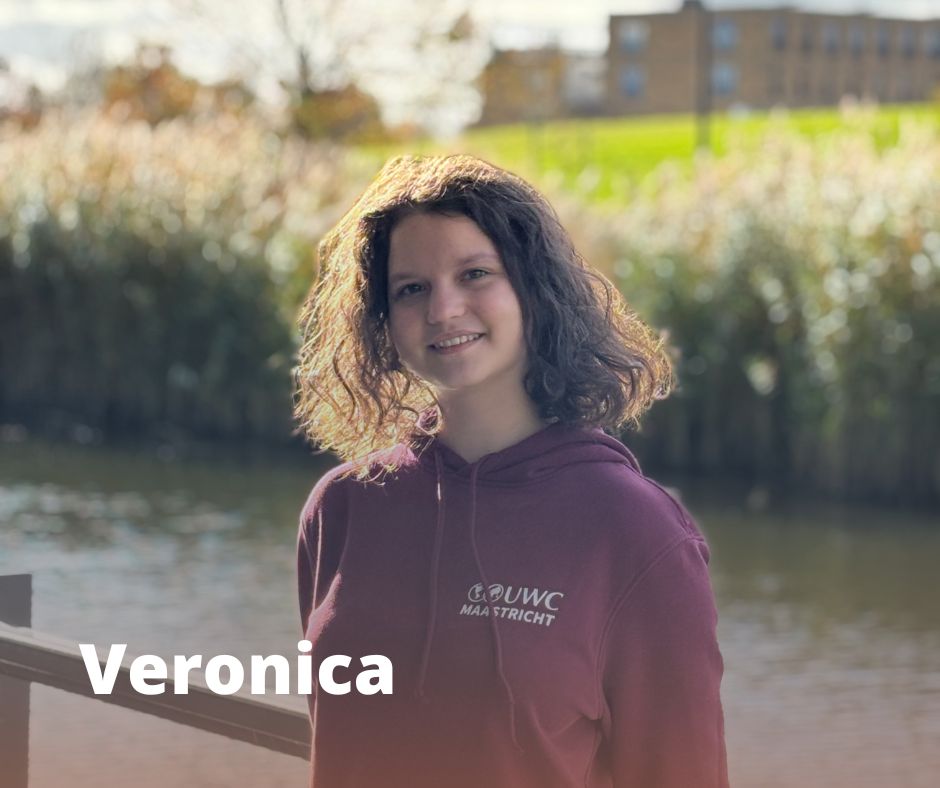
Veronika, a 17‑year‑old student at UWC Maastricht from Ukraine and a Davis‑UWC Dare to Dream scholar, has been selected among the top 30 nominees for the International Children’s Peace Prize 2025. The award, once received by Greta Thunberg, honors young people whose courage and action contribute to peace, justice and children’s rights around the world.
Growing up in an occupied territory, she turned limited access to education and constant uncertainty into the motivation to create real solutions for others. She founded Tangle of Skills, a youth-run NGO that tackles Ukraine’s growing teacher shortage by training young people to become peer educators in communities disrupted by displacement.
Beyond this, Veronika has worked with organisations such as Active Generation and Voices of Children, where she helped set up a Child Creative Council, organised speaking clubs on social issues and created educational sessions on children’s rights. Her advocacy has brought her to major international spaces including the British Parliament and a Canadian sub-commission where she speaks about the realities of children living under occupation and the importance of youth-led peace building.
We sat down with her to hear more about her journey, the concrete impact of her projects, and what this nomination means to her.
You’ve been nominated for the International Children’s Peace Prize 2025 and made it to the top 30. How does it feel?
It still feels a bit surreal. When my friend nominated me back in April, I didn’t expect anything to happen and I honestly thought I wouldn’t even make it into the top 30. There were more than 300 nominations. For me, it’s not only about the recognition. It’s also a chance to keep talking about Ukraine, about human rights and about young people who live through occupation or displacement. People sometimes forget these stories and awards like this help bring attention back.
The prize focuses on activism and peace building by young people. How do you see your work fitting into that?
I’ve always been someone who takes initiative. My parents never pushed me into anything, I did things because I wanted to. That led me into theatre, culture projects, volunteering, social initiatives… all before the full-scale invasion.
When the occupation started, everything changed. But at the same time, it pushed me to think about what peace really means for children. When you talk about “politics,” people can say the world is complicated and avoid the topic. But when you say “children are being forcibly deported” or “children cannot speak their own language at school,” suddenly people listen. I realised that talking about children’s rights can open conversations that adults often avoid.
Your NGO, Tangle of Skills, has become a significant part of your work. How did it begin?
It actually started during an online program called Agents of Change. I joined it while still living in the occupied territory. Sometimes the internet connection was blocked so I had to stand next to these metal structures near my home just to get enough signal to join classes or presentations.
The program required us to present our own project idea and that’s how Tangle of Skills was born. At first it was just something I wanted to do to stay connected with others during the occupation. But now it has grown into a real NGO that focuses on closing educational gaps and encouraging young people to become educators themselves.
Ukraine has a shortage of teachers because many have left, retired or gone to fight. So we encourage peer learning, create youth-led workshops and organise events on diversity and education. It’s both practical and empowering.
While in Ukraine, you were also involved in other youth organisations. Can you tell us more?
Yes, I joined several initiatives because they helped me stay connected and feel useful. I worked with a volunteer hotline that connected people who needed help with people who could offer it. I collaborated with an NGO called Active Generation, which focuses on youth leadership and later joined Voices of Children.
With Voices of Children, I first joined as a participant but eventually we created the Child Creative Council. We organise speaking clubs about social issues, educational sessions on children’s rights and even a film festival for teenagers because there were no platforms for young people to share their own films about issues they care about. It was also a form of healing for many of us.
You’ve spoken about your experiences in major international spaces, including parliaments. How did that begin?
It happened almost accidentally. With Voices of Children, we were given opportunities to speak about child rights and life under occupation. I suddenly found myself preparing to speak at the British Parliament without any prior training in advocacy. It was really hard because you have only a few minutes to say something meaningful and honest.
But it shaped me a lot. And then at UWC Maastricht, I learned even more about how to express what I want to say, not just what my vocabulary allows. When I later spoke for a Canadian sub-commission, less than a year after London, I felt the difference. I was more confident, clearer and understood advocacy better.
How has UWC Maastricht influenced your advocacy journey?
UWC Maastricht gave me a safe space to learn how to tell my story. When you talk to people here, you know many of them may become leaders in the future. What you share with them might shape how they see the world.
At the same time, this environment lets you practice, make mistakes and for sure try again. I’ve learned so much about communication, advocacy and how to frame experiences in a way that others can understand.
Do you have a message for the UWC Maastricht community?
I think the most important thing is to keep paying attention. People forget and even big conflicts slowly disappear from the news. But forgetting doesn’t make problems go away.
Communication and action need each other. We need stories and we also need solutions. And many of those solutions come from young people who aren’t always noticed. So if you hear something that matters, don’t let it disappear. Keep talking about it.
